Friday, 10 June 2016


Accepting entries 

Monday 13th June 
Tuesday 14th June 
Wednesday 15th June
Thursday 16th June

Please telephone or email for an appointment
0191 537 2630
info@boldonauctions.co.uk


We are open Friday 10th June
10 am - 12 noon & 2 pm - 4 pm

FREE Valuations

No appointment neccessary

Monday, 6 June 2016

You were only supposed to blow 
the doors off!


Lot 303 A Cyrus Price and Co. Limited Safe
Estimate £50 - £80
to be offered for sale on Wednesday 8th June Antique and Interiors Sale. 

In the 1850's there were two major safe rivals in Wolverhampton Thomas Milner and George Price.    

At first, things started out mildly.  Milner displayed in his window a mint condition Milner safe, with a totally mutilated Price safe next to it.  But then things escalated to a series of challenges of public testing of the safes, both against fire and brute force entry.

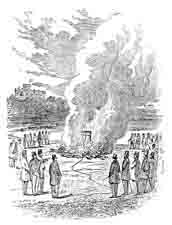
One such test took place in April 1860, both Price and Milner showed up with safes to include in the test.  As a public test, anyone could try to test the safes.  One man, Mr. Freestone, did not like Price, so he showed up that day with a large quantity of gun powder to test a safe.  When he tried to place his charge in the lock of the price safe, he discovered that the lock would not hold the mount of gunpowder that he expected, and he was unsuccessful.  Milner’s safe was then prepared (by Price’s men), and the door was blown right off its hinges.  Milner had boasted a “double patent gunpowder-proof solid lock” but within seven minutes a hole was drilled through the door plate, and the powder was poured through the hole to where the movement of the main bolts were located. Milner’s safe didn’t stand a chance. 

Milner then tried to do the same to Price’s safe, but met with failure when they tried to drill or find any other way to dislodge the spindle so they could place a full charge of gunpowder.  Considering the trial over and a success, price and his men left.  But Milner was not to be out done, he was determined to blow up a Price safe that day.  Milner had his men bring an older style safe. Though only five years old, it did not incorporate the improvements of the newer safe, and the lock had been packed with an excessive amount of gunpowder. The safe was blown into bits.  The crowd had only been expecting an explosion similar to what they had seen before, so no extra precautions were taken for the larger amount of powder.  Pieces of the safe flew into the crowd and a young boy was killed.
  
Though full of remorse for what happened, Milner and Price continued in their bitter rivalry, their attitudes unchanged.

The "212" is in reference to the temperature at which papers char, or 212 degrees Centigrade.  If the interior temperature of a safe is kept below this temperature, documents should be protected.   

Cyrus Price died in 1895 though his company continued into the early 1900's.   
Can you give this Dog a home?

This adorable pug is to be offered for Auction on Wednesday 8th June in our Antique and Interiors Sale.


Lot 59 - A Winstanley model of a seated Pug, standing 31 cm high.  Estimate £80 - £110.

Friday, 13 May 2016

A Cello bow, stamped E.Sartory a` Paris – Sold in our Antique and Interiors sale for £6500


Originating from Mirecourt France, Eugène Nicolas Sartory (1871) became known as an influential French archetier/ bow maker.  Sartory first learned his trade as an apprentice to his father and then went on to work with Paccatte and Lamy Père, before setting up his own shop on the Boulevard Nouvelle in 1893.
Sartory’s bows are marked "E.SARTORY A PARIS".  It is said that bows made by the French archetier have been among those most sought after in instrument building for over 100 years.  His perfectly balanced pieces have become classical examples of the standard of bow that follows the tradition of François Xavier Tourte.  Sartory perfected his own model and throughout his lifetime produced amazing standard high quality pieces.  Working mostly with dark Pernambuco in the earlier period and becoming increasingly lighter into the later years; but always giving his bows luxurious details, with ebony, silver and gold fittings as well as tortoiseshell thumb leather and lizard skin. 


Below is a selection of lots that sold in our last Antique and Interiors sale! It was a fantastic sale and we would like to thank everyone who  participated!


Saturday, 7 May 2016

Two beautiful lots designed by William Hair Haseler for Liberty's:

Lot 431
A small silver Art and Crafts design bowl, by William Hair Haseler for Liberty's, decorated with 3 stylised hearts enamelled in greens and blues, Birmingham 1904, impressed number 2199, weight 95.4 grams / 3.0 oz
Estimate £150 - £250


Lot 432
An Art and Crafts silver buckle design by William Hair Haseler for Liberty's, of shaped design, centred blue and green enamelled heart, Bimingham 1909, impressed number 00, weight 37 grams / 1.1 oz
Estimate £150 - £250


These lots will be sold on Wednesday 11th May Antique and Interiors Sale.  The Auction starts at 10am.


Lot 293 
A Cello bow, stamped E. Sartory a Paris to be sold Wednesday 11th May
Estimate £500 - £800

Friday, 29 April 2016

Boldon Auction Galleries are delighted to be offering for auction the following fantastic items.
The lots will be for sale in our upcoming Antiques and Interiors Sale on Wednesday 11th May 

 
Military Cross, awarded to
Lieutenant G.S. Bird
On March 24th 1920,
For actions at the Somme, March 1918


A little bit of history of the Military Cross
Since 28th December 1914 the third-level military decoration, The Military Cross (MC) has been awarded to officers of the British Armed Forces. In 1993 a review of the honours system saw the award granted to other ranks of the British Armed Forces.  The Military Cross is granted for “an act or acts of exemplary gallantry during active operations against the enemy on land to all members, of any rank in Our Armed Forces”. Since 1979 the award can be granted posthumously along with a number of other military awards.

A little bit of battle history
The First Battle of the Somme, 1918, was officially named by the British Battles Nomenclature Committee due to much of the ground being fought over being wilderness left from the 1916 Battle of the Somme.  The battle saw the beginning of the end of the First World War when the offensive failed. Although reinforcements arrived in France from the United States of America to give aid and replace the Entente casualties, the German Army were already unable to recover from their losses. The offensive known as Operation Michael were unable to achieve their aim and the German advance was reversed in the Allied Hundred Days Offensive in the Second Battle for Somme 1918.
Operation Michael began its Spring offensive on 21st March 1918, it was a First World War German military operation; launching from the Hindenburg Line, in the vicinity of Saint-Quentin, France. Once they had broken through Allied lines, they aimed to advance north-west and seize the Channel ports, hoping to drive the British Expeditionary Force (BEF) into the sea. Ludendorff however made a change to this plan and two days later pushed for an offensive due west, along the whole of the British front north of the River Somme. His intention was to separate the British and French Armies, crushing the British forces into the sea. At Villers-Bretonneux, the offensive came to an end, the Entente were able to stop the German advance east of the Allied communications centre at Amiens; having suffered many casualties at this point the German armies were unable to continue supplying the advancing troops.


A very rare and stylish 1930’s enamel and chrome Bahamas Automobile club badge, with enamelled crown motif, and central detail of a galleon at sea with legend, ‘Expulsis-Piratis-Resti-Tuta-Commercia’, translating to ‘Pirates Expelled – Commerce Restored’.

Highlights from our last General Sale
Our sale on Wednesday 27th April started with a fantastic Volkswagen Polo selling for a staggering £2300... We had many happy customers.
Take a look below to see some of our favorite items.